Can a Seller Pay Closing Costs on a VA Loan?
You're using your VA home loan benefit.
You may qualify for:
$0 DOWN.
Then your lender hands you an estimate showing:
Closing costs.
Homeowners insurance.
Prepaid expenses.
Escrow funding.
Other costs.
And suddenly you're thinking:
“WAIT... I THOUGHT VA WAS ZERO DOWN?”
😂
Here's the first thing we need to clear up:
$0 DOWN DOES NOT MEAN $0 CLOSING COSTS.
But here's the good news:
A SELLER MAY BE ABLE TO PAY SOME OF A VA BUYER'S CLOSING COSTS.
And understanding how that works can potentially make a major difference in how much cash you need at closing.
But there's one VA rule that gets misunderstood constantly:
THE 4% RULE.
Let's fix that today.
First: What Are Closing Costs?
Closing costs are expenses associated with completing your home purchase and mortgage.
Depending on your transaction, these can include things such as:
Lender-related charges
Appraisal
Title-related charges
Recording fees
Prepaid homeowners insurance
Property-tax-related amounts
Escrow funding
and other allowable expenses.
Your actual costs depend on your:
Loan
Property
Lender
Contract
and transaction.
That's why I don't like throwing out one universal number and telling every buyer:
“Your closing costs will be exactly this much.”
They won't.
Can the Seller Pay Them?
YES—SUBJECT TO THE CONTRACT AND VA/LENDER RULES.
VA allows sellers to pay certain buyer closing costs.
This can be negotiated as part of the offer.
For example, a buyer might offer:
$350,000 purchase price
and request:
Seller contribution toward allowable buyer closing costs.
The seller can:
Accept
Reject
or:
Counteroffer.
Seller assistance isn't automatically owed to a VA buyer.
IT'S NEGOTIATED.
Here's Where Everybody Gets the VA 4% Rule Wrong
You've probably heard:
“The seller can only pay 4% of the buyer's closing costs on VA.”
That statement is misleading.
The VA's 4% limitation applies to seller concessions as VA defines them.
It does not mean every seller-paid normal closing cost is automatically included in that 4% concession bucket.
That's an important distinction.
Seller-Paid Closing Costs vs. Seller Concessions
Think of this as two buckets.
🪣 BUCKET #1 — NORMAL CLOSING COSTS
VA guidance allows a seller to pay certain buyer closing costs without automatically treating all of those payments as seller concessions subject to the 4% cap.
🪣 BUCKET #2 — SELLER CONCESSIONS
Certain additional benefits paid on the buyer's behalf are considered seller concessions.
VA limits seller concessions to:
4% OF THE ESTABLISHED REASONABLE VALUE OF THE PROPERTY.
That distinction is the key to understanding the rule.
What Does VA Consider a Seller Concession?
Under VA guidance, seller concessions can include certain items or payments provided by the seller beyond ordinary closing costs.
Examples can include things such as:
Payment of the buyer's VA funding fee
Certain prepaid expenses
Certain insurance-related costs
Paying off certain buyer obligations or debts
and other qualifying concessions.
The exact treatment of a particular credit should be confirmed with the lender.
Let's Use a Simple Example
Suppose the home's established reasonable value is:
$350,000
Four percent would be:
$14,000
That doesn't necessarily mean:
“The seller can only contribute $14,000 total toward everything.”
Instead, the 4% limitation applies to items classified as seller concessions under VA rules.
Certain ordinary closing costs paid by the seller may be treated separately.
That's why:
DON'T TRY TO CALCULATE THIS FROM A SOCIAL MEDIA POST.
😂
Have your VA lender structure the numbers correctly.
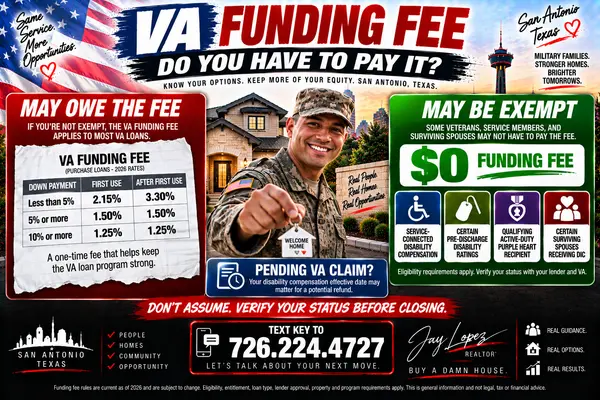
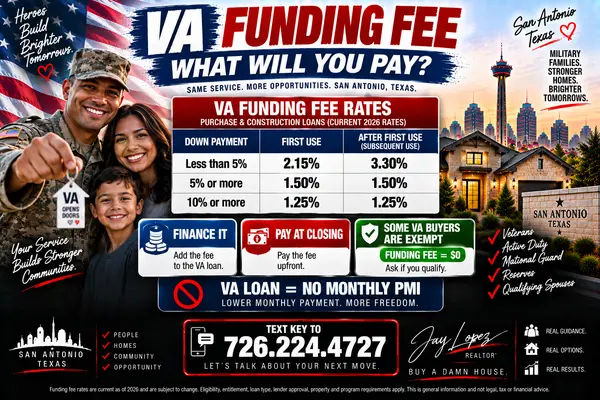
Can the Seller Pay the VA Funding Fee?
POTENTIALLY, YES.
The VA funding fee is specifically an example of something that may be treated as a seller concession.
Remember Blog #31?
Depending on:
First or subsequent use
Down payment
Loan type
and:
Exemption status
the funding fee can represent thousands of dollars.
So if the buyer isn't exempt, having the seller pay the funding fee may potentially reduce the buyer's cash requirement.
But:
IT MUST FIT THE TRANSACTION AND APPLICABLE VA RULES.
What If I'm Exempt From the VA Funding Fee?
Then you don't need the seller paying a fee you don't owe.
😂
That's why Blog #32 was important.
If you're exempt, we want to know that early.
Then we can evaluate whether a negotiated seller contribution could potentially be applied to other allowable expenses instead, subject to the contract and lender approval.
Can the Seller Pay Prepaid Expenses?
Certain prepaid expenses may potentially be treated as seller concessions under VA rules.
This can include applicable items associated with establishing the buyer's ownership and loan.
But again:
THE LENDER NEEDS TO VERIFY HOW EACH CREDIT IS CLASSIFIED.
This is why I don't want the Realtor, lender and title company operating in three different worlds.
Everybody needs to understand how the deal is structured.
Can the Seller Pay Off the Buyer's Debt?
This one surprises people.
VA seller-concession rules can permit certain seller-paid obligations on behalf of the buyer to be considered concessions.
But this is not something to casually add to a contract because:
“I saw it online.”
😂
If a buyer is considering an unusual concession involving debt or another financial obligation, the lender needs to review it carefully before the offer is structured.
Can a Seller Give the Buyer Cash Back?
NOT LIKE A CASH REBATE.
Seller credits aren't an ATM.
😂
You don't simply negotiate:
“Seller gives me $10,000”
and walk out of closing with $10,000 spending money.
Credits generally have to be applied to allowable transaction expenses according to the loan, contract and settlement requirements.
What If I Don't Use the Entire Seller Credit?
This is important.
Suppose your contract provides:
$10,000
toward allowable buyer costs.
But when the final numbers are completed, you only have:
$7,500
of eligible costs available for that credit.
Don't automatically assume:
“Cool. I get the other $2,500.”
Generally, unused seller credit isn't simply handed to the buyer as cash.
This is why we want the lender involved when deciding how much seller assistance to request.
ASK FOR A NUMBER THAT MAKES SENSE.
Can Seller Assistance Cover Your Down Payment?
Don't assume a seller contribution simply replaces a required borrower down payment.
Down-payment requirements and permitted sources of funds are governed separately by the applicable loan rules.
For many eligible VA buyers with sufficient entitlement:
NO VA-REQUIRED DOWN PAYMENT MAY BE NEEDED ANYWAY.
But that still doesn't turn a seller credit into cash.
What About Earnest Money?
Earnest money is different again.
In Texas, earnest money is a negotiated amount delivered according to the purchase contract.
It isn't the same thing as:
Down payment
or:
Seller closing-cost assistance.
At closing, properly credited buyer deposits can become part of the overall settlement calculation.
But don't confuse the categories.
What About the Texas Option Fee?
Same thing.
Your option fee and earnest money serve different contractual purposes from seller-paid closing costs.
The fact that a seller is contributing toward allowable closing expenses doesn't mean:
“I don't need to worry about earnest money or option money.”
Your contract controls those obligations.
Can Seller Assistance Help a $0-Down VA Buyer Get Closer to $0 Out of Pocket?
POTENTIALLY.
This is where VA financing can become interesting.
Imagine an eligible buyer has:
No VA-required down payment
and negotiates:
Seller assistance toward allowable closing expenses.
That can potentially reduce the amount the buyer needs at closing.
But I'm intentionally saying:
REDUCE.
Not:
GUARANTEE $0.
Because you may still have things like:
Inspection expenses
Contract deposits
Appraisal-related expenses
Prepaid amounts
or other transaction-specific costs.
Example: VA Buyer With Seller Assistance
Let's use a simplified hypothetical.
Purchase price: $325,000
VA-required down payment: $0 for an eligible borrower with sufficient entitlement
Estimated allowable buyer costs: $9,000
The buyer negotiates:
Seller pays up to $7,500 toward allowable buyer costs.
If approved and properly applied, that could substantially reduce the buyer's cash needed for those expenses.
But the exact result needs to come from:
THE FINAL LOAN AND CLOSING NUMBERS.
Not this example.
Does Asking for Closing Costs Make Your Offer Weaker?
IT CHANGES THE ECONOMICS OF THE OFFER.
That's a better way to think about it.
Imagine two offers.
BUYER A
$350,000
No seller assistance requested.
BUYER B
$350,000
Requests $10,000 toward closing costs.
Those offers don't produce the same net proceeds for the seller, all else being equal.
So when we ask for assistance, we need to understand:
Market conditions
Competing offers
Property condition
Days on market
Seller priorities
and the overall offer.
Sometimes Price and Seller Credit Can Be Negotiated Together
For example:
Listed price: $340,000
A buyer might consider an offer structured around a particular price with a request for seller assistance.
But here's where the appraisal matters.
You cannot simply inflate the price indefinitely to create credits.
The transaction still has to work with:
Appraised value
Loan requirements
Seller agreement
and the overall financing.
THE NUMBERS HAVE TO MAKE SENSE.
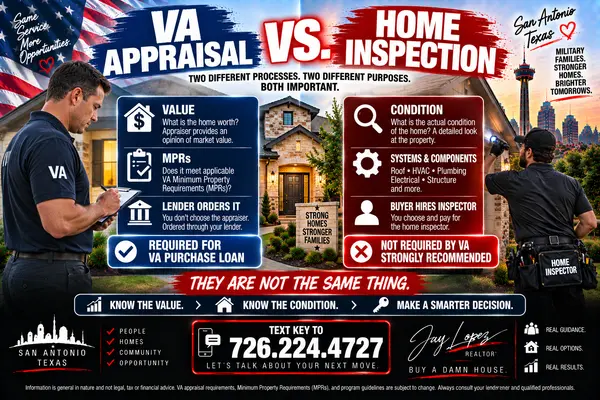
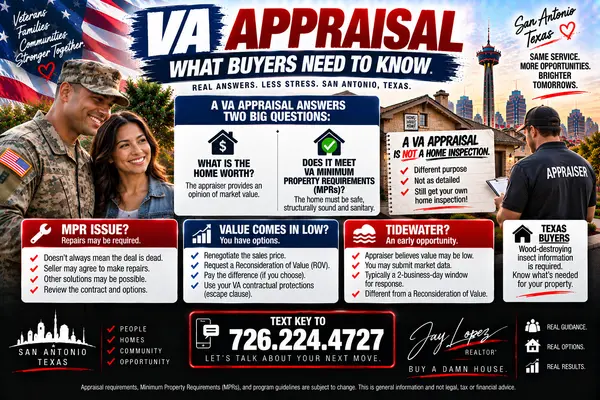
VA Appraisal Still Matters
Remember Blog #33?
The VA appraisal provides an opinion of market value.
If your transaction depends on a higher sales price to support a seller credit, the property still needs to support the financing.
Example:
Contract price: $360,000
with:
$10,000 seller assistance.
But VA appraised value:
$345,000.
Now we have a different conversation.
A seller credit doesn't override the appraisal.
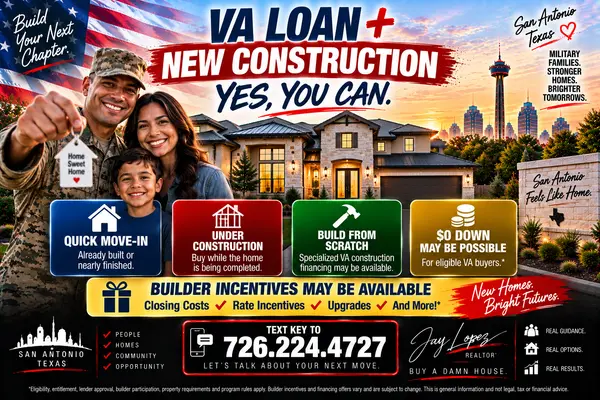
What About New Construction?
This can get especially interesting.
Builders frequently advertise:
“WE'LL PAY YOUR CLOSING COSTS!”
or:
“$15,000 IN INCENTIVES!”
Those offers may be valuable.
But read the conditions.
They may require:
Builder's preferred lender
Specific homes
Specific financing
Certain closing dates
Approved credit
or other conditions.
Builder Credit vs. Seller Credit
From the buyer's perspective, both may reduce certain expenses.
But the actual promotion needs to be reviewed by the lender and reflected correctly in the transaction.
Don't simply compare:
$15,000 CREDIT
against:
$10,000 CREDIT
and assume $15,000 wins.
What if the second builder has:
Lower home price?
Better interest rate?
Lower taxes?
No lot premium?
Better financing structure?
Compare the:
WHOLE DEAL.
Can a Builder Pay the VA Funding Fee?
Potentially, subject to VA concession rules and the actual transaction.
For a non-exempt borrower, that can be valuable.
For an exempt borrower?
Funding fee:
$0
So that particular concession wouldn't be necessary.
Again:
KNOW YOUR VA STATUS BEFORE COMPARING INCENTIVES.
Military Buyers: Seller Assistance Can Preserve Cash
This is one reason seller assistance may be especially valuable.
A PCS can already involve:
Moving expenses
Temporary lodging
Travel
Deposits
Furniture
Pet expenses
and plenty of:
“Why did that cost $800?”
😂
Keeping more cash available after closing may be valuable.
But we still need to structure an offer that makes sense for both the buyer and the transaction.
Seller Assistance Doesn't Make an Overpriced Home a Good Deal
This is worth saying.
Imagine:
House A: $350,000 with $10,000 seller assistance
House B: $335,000 with no seller assistance
Which is better?
WE DON'T KNOW YET.
We need to compare:
Appraised value
Monthly payment
Cash to close
Interest rate
Property condition
Taxes
Insurance
and your plans.
Don't get hypnotized by:
FREE CLOSING COSTS!
😂
There is no substitute for doing the math.
How Much Seller Assistance Should You Ask For?
Not:
“Whatever the maximum is.”
Instead, ask your lender:
“WHAT DO I ACTUALLY NEED?”
Get an estimate of:
Cash to close
Allowable costs
Prepaids
Funding fee
Available credits
and other applicable expenses.
Then your Realtor can help determine how that request fits into the offer strategy.
Get the Lender Involved BEFORE the Offer
This is one of the easiest ways to avoid problems.
Before requesting:
$5,000
$10,000
$15,000
or another amount,
ask your lender:
“CAN I USE THIS CREDIT?”
and:
“HOW WILL IT BE CLASSIFIED UNDER VA RULES?”
That's a much better conversation before the contract is signed than after.
VA Seller Assistance Checklist
Before making the offer:
🇺🇸 1. CONFIRM YOUR VA FINANCING
Know the loan structure.
💰 2. VERIFY YOUR FUNDING-FEE STATUS
Exempt or not?
🧮 3. GET AN ESTIMATE OF CASH NEEDED
Don't guess.
🪣 4. SEPARATE CLOSING COSTS FROM VA SELLER CONCESSIONS
Remember—they aren't automatically the same bucket.
📊 5. UNDERSTAND THE 4% RULE
It applies to seller concessions as VA defines them—not necessarily every ordinary seller-paid closing cost.
📝 6. STRUCTURE THE OFFER CORRECTLY
Use the actual contract and lender numbers.
🏠 7. DON'T IGNORE THE APPRAISAL
The property's value still matters.
🔑 8. REVIEW FINAL NUMBERS BEFORE CLOSING
Know exactly where every credit went.
The Biggest Myth
Let's kill this one permanently:
❌ “VA SELLERS CAN ONLY PAY 4% OF CLOSING COSTS.”
That's not an accurate way to describe the rule.
A better explanation is:
✅ VA LIMITS CERTAIN SELLER CONCESSIONS TO 4% OF THE PROPERTY'S ESTABLISHED REASONABLE VALUE, WHILE CERTAIN ORDINARY CLOSING COSTS PAID BY THE SELLER ARE TREATED SEPARATELY.
That distinction matters.
A lot.
The Bottom Line
🇺🇸 YES—A SELLER MAY PAY CERTAIN CLOSING COSTS FOR A VA BUYER.
And depending on the transaction, seller assistance can potentially reduce the amount of cash a buyer needs to bring to closing.
But remember:
THE VA 4% RULE IS A SELLER-CONCESSION RULE.
It isn't simply:
“Seller can only pay 4% toward everything.”
Your lender should confirm:
Which costs are allowable
Which items count as concessions
How much credit you can actually use
and:
How the final transaction should be structured.
Don't leave money on the table because you misunderstood the rule.
And don't ask for a giant credit you can't use because somebody on Facebook told you:
“VA gives you 4%.”
😂
BUILD THE OFFER AROUND THE ACTUAL NUMBERS.
Buying With VA in San Antonio?
Let's figure out the financing before we write the offer.
🔑 Text KEY to 726.224.4727
Send me:
Veteran / Active Duty
Approximate price range
Cash you want to keep available
and:
When you're planning to buy.
Example:
“KEY — Veteran — $350K — want to keep cash for the move — buying in 90 days.”
We'll start building the home-buying strategy, and your VA lender can determine exactly how seller assistance may work with your loan.
Follow @jaylopezrealtor for San Antonio VA home-buying education, PCS information and new construction.
Buy a damn house. 🇺🇸🔑
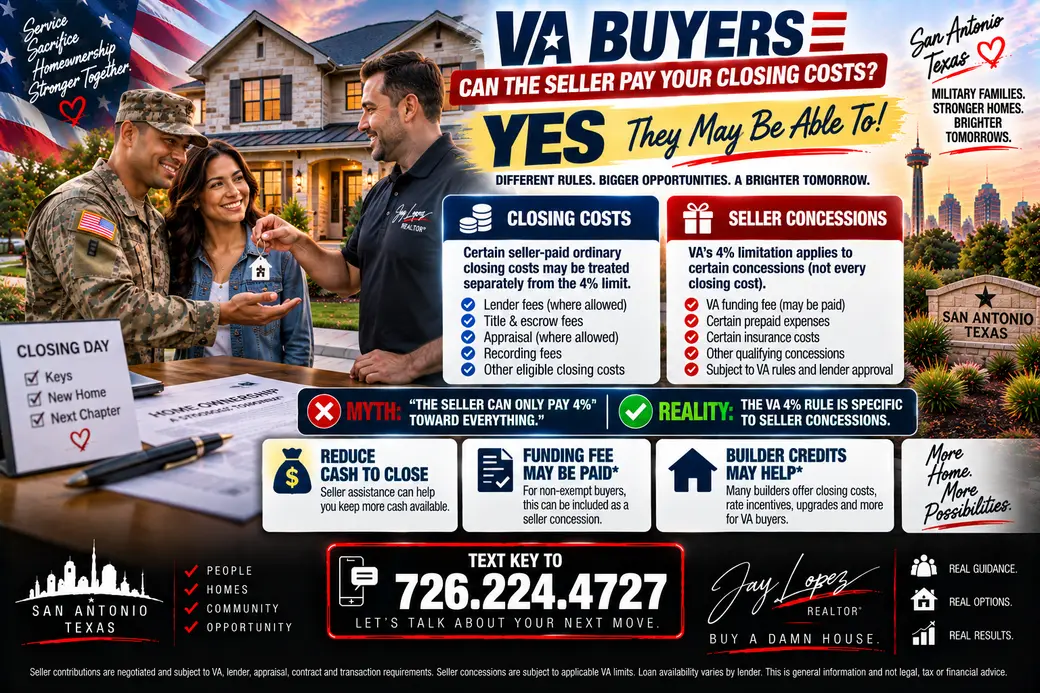
Featured Image Concept
This should be a “VA Seller Assistance” money infographic.
Main image: Veteran/military buyer receiving house keys in front of a San Antonio home, with a seller-credit document and closing table imagery.
MAIN HEADLINE:
🇺🇸 VA BUYERS
CAN THE SELLER PAY YOUR CLOSING COSTS?
Huge answer:
YES — THEY MAY BE ABLE TO.
Then split the middle into two buckets:
🪣 CLOSING COSTS
Certain seller-paid ordinary closing costs may be treated separately
🎁 SELLER CONCESSIONS
VA's 4% limitation applies to certain concessions
Large myth-buster banner:
❌ MYTH: “THE SELLER CAN ONLY PAY 4% TOWARD EVERYTHING.”
✅ REALITY: THE VA 4% RULE IS SPECIFIC TO SELLER CONCESSIONS.
Then three icons:
💰 Reduce Cash to Close
🇺🇸 Funding Fee May Be Paid*
🏠 Builder Credits May Help*
Bottom:
KNOW THE RULES. STRUCTURE THE OFFER. KEEP MORE CASH.
TEXT KEY — 726.224.4727
Jay Lopez | REALTOR®
Buy a damn house.
Categories
Recent Posts