Understanding the VA Funding Fee: What Veterans and Military Buyers Need to Know
You're using your VA home loan benefit.
You hear:
$0 down may be possible.
Great.
No monthly private mortgage insurance.
Even better.
Then your lender mentions:
THE VA FUNDING FEE.
And you're thinking:
“Wait. What's that?”
😂
The VA funding fee is one of the most misunderstood parts of a VA loan, so let's make this simple.
For most borrowers who aren't exempt, the VA funding fee is a one-time fee associated with a VA-backed or VA direct home loan. VA says the fee helps reduce the program's cost to taxpayers because the VA loan program offers benefits such as no required down payment in many purchase situations and no monthly mortgage insurance.
And here's the big thing:
🇺🇸 NOT EVERY VA BORROWER HAS TO PAY IT.
What Is the VA Funding Fee?
The funding fee is not:
❌ Monthly PMI
❌ Your down payment
❌ Your earnest money
❌ Your option fee
❌ Your home inspection
❌ Your appraisal fee
It is a separate one-time VA funding fee that applies to many VA loans.
The exact percentage can depend on factors including:
The type of VA loan
Whether you've used the VA home loan benefit before
and, for purchase and construction loans,
How much you're putting down.
How Much Is the VA Funding Fee in 2026?
Let's get to the number everybody wants.
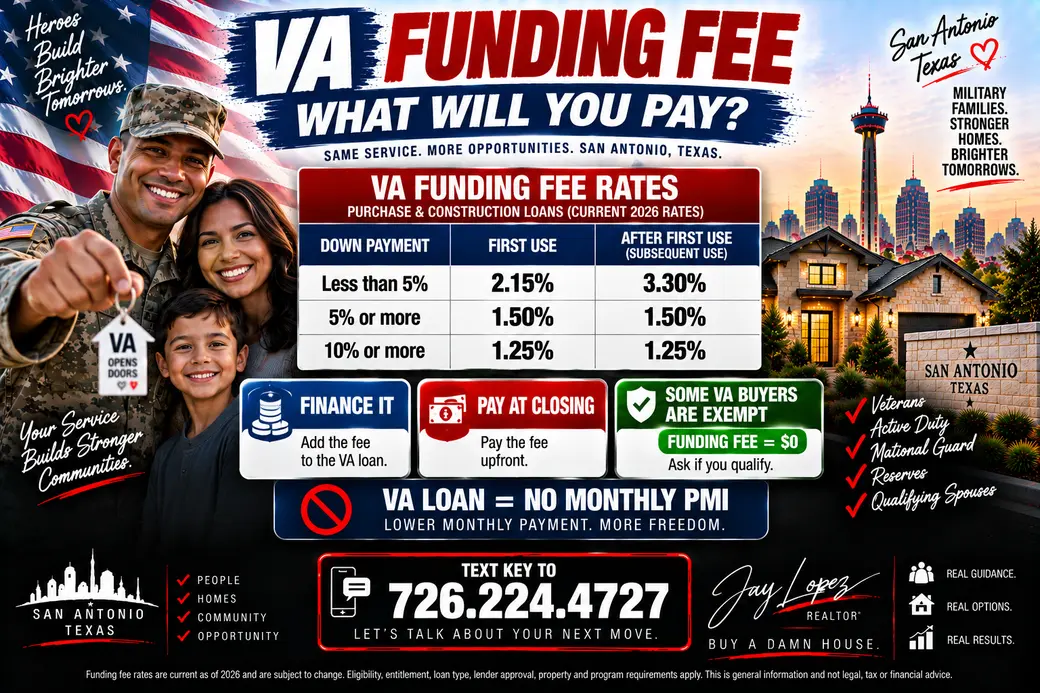
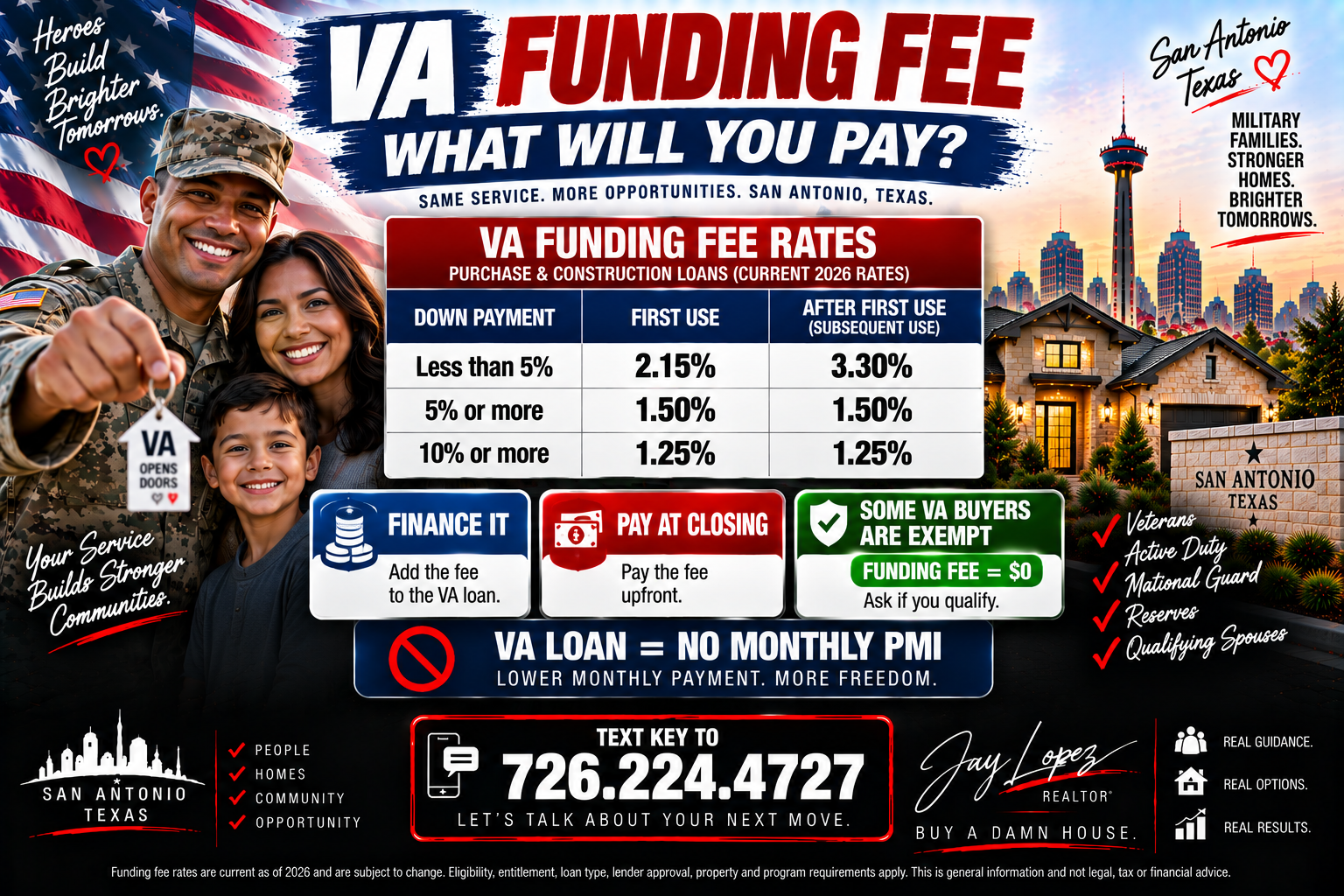
For VA-backed purchase and construction loans, the current VA schedule is:
| Down Payment | First Use | After First Use |
|---|---|---|
| Less than 5% | 2.15% | 3.30% |
| 5% or more | 1.50% | 1.50% |
| 10% or more | 1.25% | 1.25% |
These rates are current in 2026; VA's published chart lists them as effective April 7, 2023.
So yes:
YOUR DOWN PAYMENT CAN CHANGE YOUR FUNDING FEE.
And whether this is your first or subsequent use can matter too.
Example #1: First-Time VA Use With Less Than 5% Down
Let's use an easy example.
Suppose your VA loan amount before the funding fee is $300,000.
You're using VA for the first time.
Your down payment is less than 5%.
Current funding fee:
2.15%
$300,000 × 2.15% =
$6,450
If you're not exempt, that would be your VA funding fee.
Example #2: Subsequent VA Use With Less Than 5% Down
Same $300,000 loan amount.
But you've previously used your VA home loan benefit.
Current subsequent-use funding fee with less than 5% down:
3.30%
$300,000 × 3.30% =
$9,900
That's a noticeable difference.
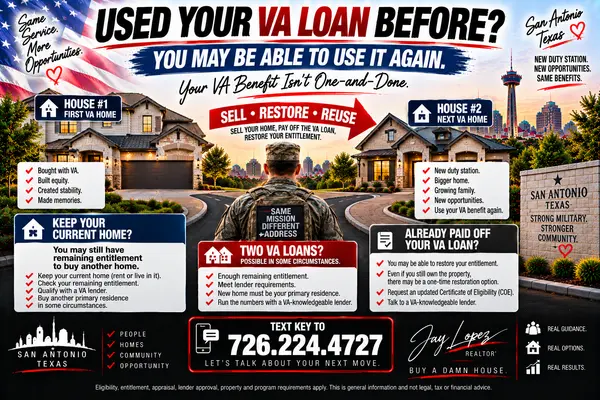
And it ties directly into what we discussed in Blog #29 about using your VA benefit more than once.
Example #3: Put 5% Down
Now suppose the applicable VA loan amount is $285,000 after a 5% down payment on a $300,000 purchase.
At 5% or more down, the current funding-fee percentage is:
1.50%
$285,000 × 1.50% =
$4,275
That's why some buyers choose to compare:
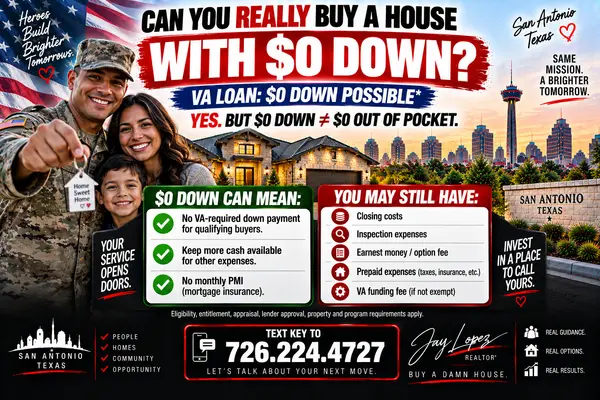
$0 or low down
versus
voluntarily putting 5% down.
But that does not automatically mean putting 5% down is the better choice.
We'll come back to that.
Example #4: Put 10% Down
With a 10% down payment on a $300,000 purchase, the base loan amount would be $270,000.
The current funding fee at 10% or more down is:
1.25%
$270,000 × 1.25% =
$3,375
Again:
Lower fee.
But you've also put $30,000 down.
Those are very different financial decisions.
Should You Put Money Down Just to Reduce the Funding Fee?
NOT NECESSARILY.
This is where I don't want somebody reading a percentage chart and immediately deciding:
“I'm putting 10% down.”
Maybe that's smart for you.
Maybe it isn't.
Imagine draining $30,000 from your savings just to reduce a fee.
Then two weeks after closing:
HVAC: “Hello.” 👋
😂
Your cash reserves matter.
So do:
Emergency savings
Moving expenses
Furniture
Repairs
Future PCS plans
Monthly payment
and your overall financial strategy.
Have the lender show you multiple scenarios.
Then make the decision based on the whole financial picture, not one fee.
Can You Finance the VA Funding Fee?
YES.
VA allows the funding fee to be included in the loan rather than requiring you to pay the entire amount in cash at closing. You can also pay it in full at closing.
This is important because it means:
You may not have to write a separate check for the funding fee at closing.
But don't confuse:
FINANCED
with:
FREE.
If you finance the fee, it becomes part of your mortgage balance.
And you're borrowing that money over time.
Example: Financing the Funding Fee
Let's return to our simplified example.
Base loan:
$300,000
First VA use, less than 5% down:
2.15% funding fee
Funding fee:
$6,450
If financed, the starting loan balance attributable to those two amounts would be approximately:
$306,450
That additional financed amount affects your loan balance and payment.
So ask your lender to show you:
With funding fee financed
versus
Funding fee paid at closing.
Can You Finance All Your Closing Costs Into a VA Purchase Loan?
NO — NOT THE SAME WAY.
This distinction matters.
VA currently states that on a purchase or construction/permanent loan, the VA funding fee can be financed into the loan amount, while other fees and charges generally must be handled at closing rather than simply added to the VA purchase-loan balance.
However, depending on the transaction, buyers may negotiate seller credits or receive builder credits for allowable costs.
Which brings us to...
Can the Seller Pay the VA Funding Fee?
Potentially.
VA allows sellers and builders to provide certain credits and concessions, subject to program rules. VA specifically identifies payment of the buyer's VA funding fee as an example of a seller concession, and seller concessions are subject to VA's 4% limit based on the home's reasonable value.
That doesn't mean:
“The seller has to pay my funding fee.”
No.
It's negotiated.
There's a big difference between:
CAN
and
MUST.
What About New Construction?
This can become especially interesting in San Antonio.
Builders may sometimes offer incentives that can help qualifying buyers with allowable transaction costs.
Depending on the builder, lender, property and current promotion, that might include:
Closing-cost credits
Financing incentives
Rate buydowns
or other incentives.
But promotions change constantly.
So never assume:
“That builder always pays the VA funding fee.”
Verify the current offer and make sure the lender confirms how the credit can actually be applied.
Who Is Exempt From the VA Funding Fee?
This is the part Veterans especially need to know.
VA says certain borrowers don't have to pay the funding fee.
Current exemptions include qualifying situations such as a Veteran who is receiving VA compensation for a service-connected disability, or who is eligible for that compensation but is receiving retirement or active-duty pay instead. VA also identifies certain surviving spouses receiving Dependency and Indemnity Compensation and certain service members with qualifying pre-discharge disability ratings.
Another important exemption:
Purple Heart recipients serving on active duty
may be exempt when applicable VA requirements are satisfied.
This is exactly why you don't want to assume:
“Everybody pays the funding fee.”
They don't.
How Do You Know If You're Exempt?
Start with your:
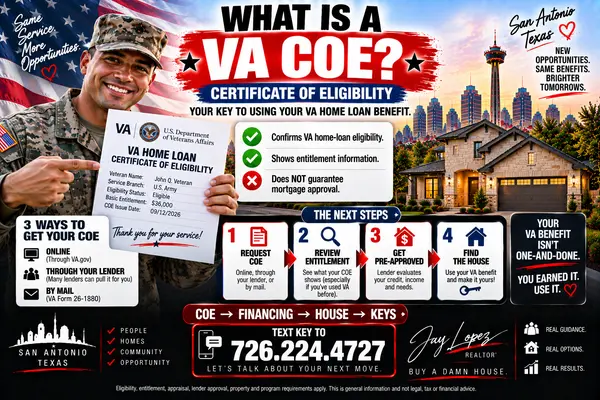
CERTIFICATE OF ELIGIBILITY — COE
Remember Blog #30?
Your lender should verify your funding-fee status as part of the VA loan process.
If you believe you're exempt but your documentation doesn't reflect that status:
ASK QUESTIONS BEFORE CLOSING.
Don't simply assume the fee is correct because it appeared on a document.
What If My Disability Claim Is Still Pending?
This can get more specific.
Your exemption status can depend on your circumstances and the effective timing of an eligible disability award or other qualifying status.
VA has procedures for situations where an exempt borrower paid a funding fee and a refund later becomes appropriate.
If you have a pending disability claim or believe you may qualify for an exemption:
Tell your lender.
Verify your status.
Ask how the rules apply to your specific closing.
Can a VA Funding Fee Be Refunded?
IN SOME CIRCUMSTANCES.
For example, VA guidance provides for refunds when an exempt Veteran paid a funding fee or when the fee was overpaid because of a calculation error.
How the refund is handled can depend on how the fee was originally paid.
If it was paid in cash, an applicable refund can be returned in cash.
If it was financed, VA guidance says the applicable overpayment is applied against the loan balance.
Again:
SPECIFIC SITUATION = SPECIFIC ANSWER.
Talk with VA and your lender.
Funding Fee vs. PMI: What's the Difference?
This is another big VA advantage that gets misunderstood.
With certain conventional financing, borrowers may have monthly private mortgage insurance when their equity/down payment is below applicable thresholds.
VA-backed purchase loans do not require monthly PMI.
Instead, many VA borrowers pay the one-time funding fee.
So:
VA FUNDING FEE
Usually one-time, unless exempt.
MONTHLY VA PMI
There isn't one.
That's an important difference when comparing financing.
Does the Funding Fee Change Your Monthly Payment?
If you finance it:
YES.
You're increasing the amount you're borrowing.
That means the financed fee becomes part of the balance used to calculate principal and interest.
The exact payment impact depends on:
Funding-fee amount
Interest rate
Loan term
and the rest of the loan structure.
Ask the lender:
“Show me my payment with the fee financed.”
Then you can see the real impact.
First Use vs. Subsequent Use Matters
This is why Blog #29 matters so much.
For a purchase loan with less than 5% down, current rates are:
First use:
2.15%
Subsequent use:
3.30%
But once the down payment reaches at least 5%, the current rate is 1.50% for both first and subsequent use.
At 10% or more down, it's 1.25% for both.
So if you've used VA before:
TELL YOUR LENDER.
They need your correct VA history and entitlement information.
What About a VA IRRRL?
If you're refinancing an existing VA loan through an:
Interest Rate Reduction Refinance Loan — IRRRL
the current funding fee is:
0.50%
for both first and subsequent use.
Different loan type.
Different funding-fee structure.
What About a VA Cash-Out Refinance?
Current VA-backed cash-out refinance funding-fee rates are:
First use: 2.15%
After first use: 3.30%
VA notes that these refinance rates don't change based on down-payment amount.
Again:
Loan type matters.
What About a VA Loan Assumption?
For qualifying VA loan assumptions, the current funding fee is:
0.50%
under VA's current schedule.
We'll go much deeper into assumptions in Blog #48 because they can become especially interesting when an existing VA mortgage has an interest rate significantly below current market rates.
One More 2026 Update: Taxes
There's also a new development worth knowing.
VA announced in February 2026 that borrowers can now deduct qualifying VA funding fees on their federal taxes under current law.
But:
Don't take tax advice from your Realtor.
😂
Tax situations vary.
Talk to your tax professional about whether and how the deduction applies to you.
The VA Funding Fee Isn't Automatically a Bad Thing
Sometimes buyers see:
$6,000
or
$9,000
and immediately think:
“That's terrible!”
But you need to evaluate it in context.
The VA program can provide eligible borrowers with features including:
Potential $0-down financing
and
No monthly private mortgage insurance.
The question isn't simply:
“Is there a fee?”
The better question is:
“How does the entire VA financing package compare with my other options?”
Compare the Whole Loan
When comparing VA against another mortgage option, look at:
Interest rate
APR
Monthly principal and interest
Mortgage insurance
Funding fee
Down payment
Closing costs
Cash needed at closing
and
Total financing structure.
Don't choose a mortgage because one number looks better.
COMPARE THE WHOLE DEAL.
Your VA Funding Fee Checklist
Before closing, know these six things:
🇺🇸 1. AM I EXEMPT?
Verify it.
💰 2. WHAT IS MY FUNDING-FEE PERCENTAGE?
First use or subsequent use?
🏠 3. DOES MY DOWN PAYMENT CHANGE IT?
Compare scenarios.
🧮 4. WHAT IS THE ACTUAL DOLLAR AMOUNT?
Not just the percentage.
🏦 5. AM I FINANCING IT OR PAYING IT AT CLOSING?
Know the difference.
📊 6. HOW DOES VA COMPARE WITH MY OTHER FINANCING OPTIONS?
Look at the entire package.
The Bottom Line
The VA funding fee sounds complicated.
It doesn't have to be.
For current VA purchase and construction loans, a non-exempt borrower generally falls into one of these funding-fee tiers:
2.15% / 3.30%
Less than 5% down, depending on first or subsequent use.
1.50%
5% or more down.
1.25%
10% or more down.
Some eligible borrowers:
PAY $0.
And borrowers who do owe the fee can generally either pay it at closing or finance it into the loan.
That's the part you need to understand.
Not fear.
Want to Know How the VA Funding Fee Could Affect Your Purchase?
🔑 Text KEY to 726.224.4727
Send me:
Veteran / Active Duty
First VA purchase or used VA before
and
Your approximate buying timeline.
Example:
“KEY — Veteran — first VA purchase — looking in 4 months.”
We'll start building the game plan.
Follow @jaylopezrealtor for San Antonio VA home-buying education, PCS information, new construction and military real estate.
Buy a damn house.
Categories
Recent Posts