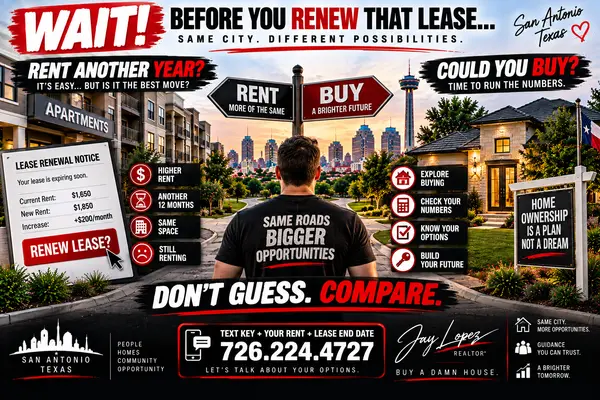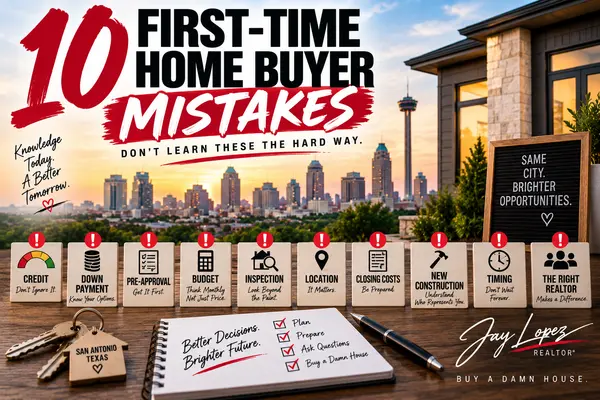
Why Renters Should Talk to a Lender Before Assuming They Can't Buy


I hear versions of this all the time:
“I'd love to buy, but my credit isn't good enough.”
Okay.
What did the lender say?
“I haven't talked to one.”
🤨
Or:
“I can't afford the down payment.”
How much did they tell you that you'd need?
“Nobody told me. I just know you need 20%.”
There it is.
One of the biggest obstacles keeping some renters from even exploring homeownership isn't necessarily their income.
It isn't necessarily their credit.
And it isn't necessarily their savings.
It's assumptions.
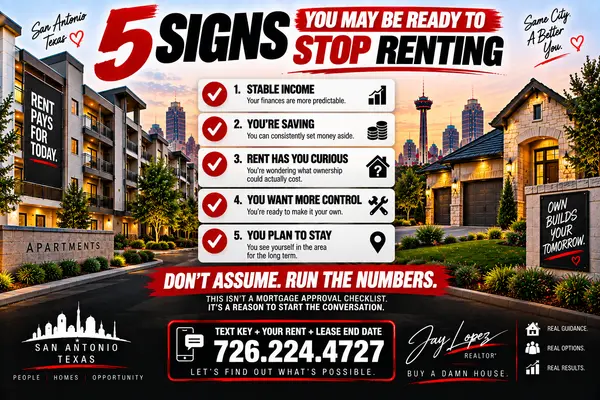
Before deciding you can't buy a home, find out what your actual numbers say.
A Realtor Can't Approve You for a Mortgage
Let's start here.
I'm a Realtor.
I can help you:
Find homes
Understand the buying process
Compare properties
Prepare and negotiate offers
Navigate a transaction
and coordinate the real estate side of your purchase.
But I'm not your mortgage lender.
I shouldn't look at you and say:
“Oh yeah, you're definitely approved.”
😂
A qualified lender needs to evaluate your financial situation and the applicable loan requirements.
What Does a Lender Actually Look At?
Mortgage qualification involves more than one number.
Depending on the loan program and lender, the evaluation can include factors such as:
Income
Employment
Credit history
Credit score
Monthly debt
Assets
Available funds
Loan amount
Property
and other underwriting requirements.
That's why:
“My credit score is 640. Can I buy?”
doesn't have a universal yes-or-no answer.
We need the whole picture.
Assumption #1: “My Credit Isn't Good Enough”
This is probably the biggest one.
People check a consumer credit app and see a number they don't like.
Then immediately decide:
“No house for me.”
Not so fast.
Different loan programs have different requirements, and lenders can also have their own underwriting standards or overlays.
VA Buyers: This Is Especially Important
There's a widespread misconception that the VA requires one specific minimum credit score for every VA-backed home loan.
It doesn't.
The VA itself does not establish a universal minimum credit score for its home loan guaranty.
Individual lenders, however, may establish their own credit requirements.
That means:
“My score is below ___, so I can't use VA.”
may be an assumption rather than an answer.
Talk with a VA-knowledgeable lender.
What If Your Credit Really Does Need Work?
Great.
Now we know.
Maybe the lender tells you:
“You're not ready today, but here's what we need to work on.”
That is dramatically more useful than spending another two years saying:
“My credit is bad.”
Now you have a target.
Your lender may identify specific issues that need attention.
Follow an informed plan rather than randomly:
Closing credit cards
Opening new accounts
Moving balances around
or trying internet “credit hacks.”
Mortgage preparation is not the time for experiments.
Assumption #2: “I Need 20% Down”
No.
Twenty percent down is not a universal requirement to purchase a home.
Depending on your eligibility, financial profile, property and lender requirements, there may be financing options with lower down payments.
Those can potentially include:
Conventional financing
FHA financing
VA financing
USDA financing
and certain qualifying assistance programs.
What About VA?
For eligible VA borrowers with sufficient entitlement, the VA loan program may allow a purchase with:
No down payment required by the VA program.
VA-backed loans also don't have monthly mortgage insurance.
Some eligible Veterans may be exempt from the VA funding fee.
But that doesn't mean:
“VA = absolutely zero dollars needed.”
Closing costs, prepaid expenses and other transaction expenses can still apply.
That's why we need the lender to calculate your actual situation.
Assumption #3: “I Don't Have Enough Cash”
Maybe.
But let's determine what:
“Enough”
actually means.
Depending on your transaction, cash considerations may include:
Down payment
Closing costs
Prepaid expenses
Earnest money
Option fee
Inspection costs
and other expenses.
But there may also be transaction-specific possibilities involving things such as negotiated seller contributions, lender programs or qualifying builder incentives.
These aren't guaranteed.
They have rules and limitations.
But they can change the overall numbers.
Builder Incentives Can Make a Difference
San Antonio has significant new-construction activity.
Builders sometimes offer promotions on qualifying homes.
Depending on current inventory and programs, those could include:
Closing-cost assistance
Financing incentives
Rate buydowns
Price reductions
or other incentives.
Those promotions can change frequently and may require use of a particular lender or other qualifications.
Don't build your plan around an advertisement.
Have the lender calculate the actual deal.
Assumption #4: “I Have Too Much Debt”
Again:
Maybe.
But don't automatically decide that yourself.
Lenders evaluate debt in relation to qualifying income and the requirements of the financing being considered.
Your:
Car payment
Credit cards
Student loans
Personal loans
and other obligations may affect qualification.
But the effect depends on your overall financial profile.
Don't Start Paying Everything Off Randomly
This surprises people.
They'll tell me:
“I'm going to empty my savings and pay off every credit card before I apply.”
Slow down.
Cash reserves can matter too.
Before making major financial moves specifically to qualify for a mortgage, talk with the lender.
Maybe paying something down helps.
Maybe another strategy makes more sense.
Get the plan first.
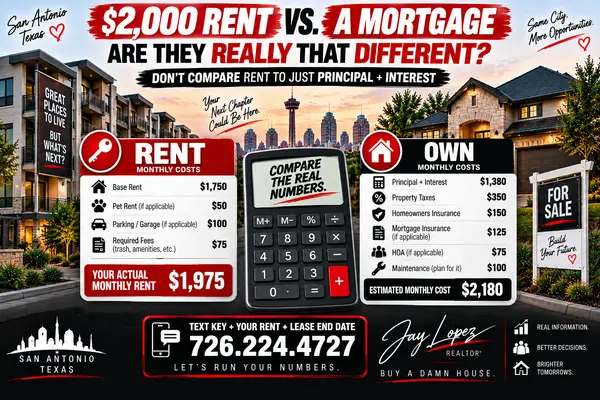
Assumption #5: “My Rent Is Cheaper Than a Mortgage”
This is another one where we need numbers.
Maybe your rent is cheaper.
Maybe it isn't.
But don't compare:
$1,900 rent
with
$1,900 principal + interest.
Ownership can also involve:
Property taxes
Homeowners insurance
Mortgage insurance, when applicable
HOA fees, when applicable
and maintenance.
We need to compare the actual estimated costs.
And Don't Forget Your REAL Rent
If your apartment advertises:
$1,750 rent
but you're actually paying:
$1,750 base rent
$50 pet rent
$75 parking
$40 trash/amenity fees
then your actual recurring housing expense is closer to:
$1,915.
That's the number worth comparing.
Assumption #6: “Talking to a Lender Means I Have to Buy”
Nope.
You can gather information without buying a house.
In fact, sometimes the best lender conversation ends with:
“Let's wait.”
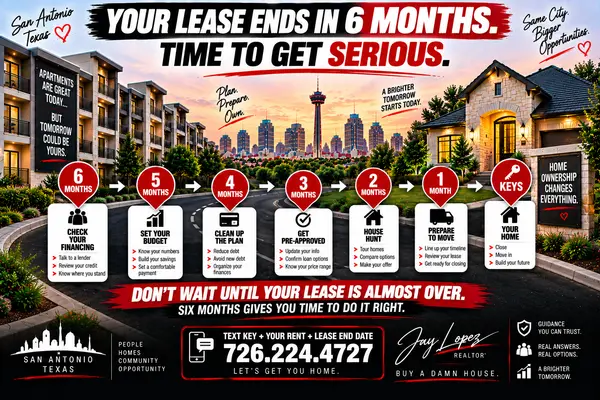
Maybe you need six months.
Maybe a year.
Maybe renting continues to make more sense for your situation.
That's okay.
The purpose of the conversation is:
Information.
Not pressure.
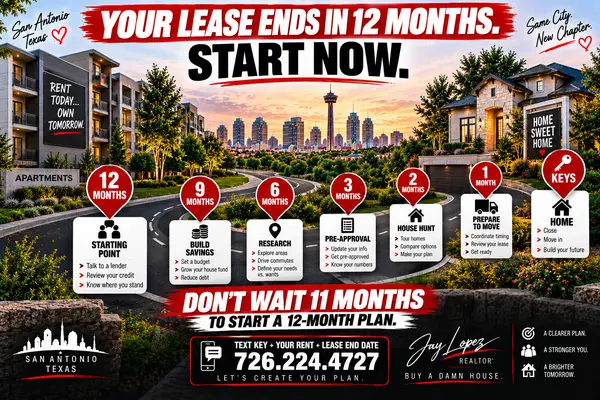
What If You're 12 Months Away?
Excellent.
Talk early.
You have time to potentially:
Build savings
Review your credit
Reduce debt where appropriate
Establish a comfortable budget
and understand your financing options.
That's why I like starting well before the lease expires.
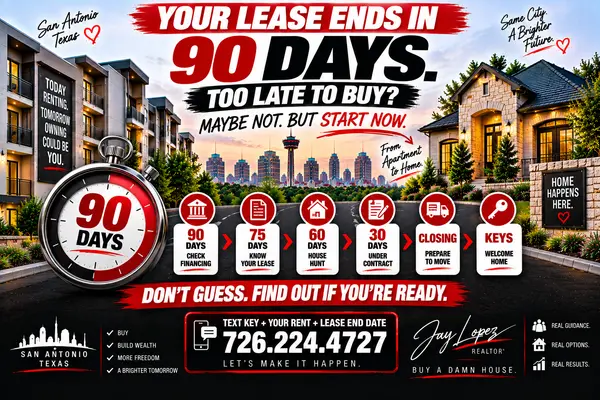
What If You're Only 90 Days Away?
Then we move faster.
😂
If your lease expires in three months, I'd want to know your financial position quickly.
If you're ready, we can discuss the next steps toward pre-approval and a focused home search.
If you're not ready?
Then we figure out what needs to happen next rather than forcing a purchase.
Talking to a Lender Is NOT the Same as Getting the Keys
Think of it this way.
The first lender conversation isn't:
🏠 “I'M BUYING A HOUSE!”
It's:
📊 “SHOW ME MY OPTIONS.”
That's a much smaller step.
And it can answer questions you've possibly been guessing about for years.
Questions to Ask the Lender
When you have that first conversation, ask:
1. Based on my current financial situation, what financing options might I qualify for?
2. What monthly housing payment should I be evaluating?
3. Approximately how much cash might I need?
4. Are there specific credit issues I should address?
5. Is there any debt I should focus on—or avoid changing right now?
6. What documents should I begin gathering?
7. When would it make sense to pursue a full pre-approval for my timeline?
8. What should I avoid doing financially before buying?
Now you've turned:
“I don't think I can.”
into:
“Here's where I stand.”
What Should You Gather?
Your lender will tell you exactly what is required for your situation.
But it can help to have information regarding things such as:
Income
Employment
Bank accounts/assets
Debts
Housing history
and other financial information readily available.
Don't worry about diagnosing your own mortgage file.
That's their job.
Don't Be Embarrassed About Your Finances
This stops people more than you might think.
Maybe you've had:
Credit problems
A divorce
Medical bills
Job changes
Past financial mistakes
or simply haven't saved as much as you'd hoped.
Don't let embarrassment keep you from getting information.
Mortgage professionals see financial situations every day.
The important question is:
Where do we go from here?
Three Possible Outcomes
After speaking with a lender, you may discover:
🟢 READY
You're financially positioned to move toward the next stage.
Great.
Let's start building the home-buying plan.
🟡 ALMOST READY
You have specific items to address.
Also great.
Now you have a roadmap.
🔴 NOT YET
Buying right now isn't financially appropriate.
You know what?
That's still a win.
Because “not yet” is very different from:
“I guess I can never buy.”
You can build the next plan around real information.
The Most Expensive Answer Might Be the One You Invented Yourself
Imagine renting for another three years because you assumed:
“I needed 20% down.”
Or:
“My credit score automatically disqualified me.”
Or:
“VA wouldn't work for me.”
Maybe buying still wouldn't have been appropriate.
But wouldn't you rather know?
Stop Asking:
“Do you think I can buy?”
Start asking:
“What would it take for me to buy?”
That question changes everything.
Maybe the answer is:
Now.
Maybe it's:
Six months.
Maybe it's:
Next year.
But now we can build a plan around the answer.
Renting in San Antonio? Stop Guessing.
If you've thought about buying but assumed you couldn't qualify, let's start with information.
Not houses.
Not pressure.
A plan.
🔑 Text KEY to 726.224.4727
Send me:
Your monthly rent
Your lease expiration
and
Where you'd like to live around San Antonio.
Example:
“KEY — $1,950 — June — near Lackland.”
We'll start from there.
Follow @jaylopezrealtor for San Antonio homes, VA information, new construction, first-time buyer education and real estate tips.
Buy a damn house.
Categories
Recent Posts