Could Your Monthly Rent Be Close to a Mortgage Payment?
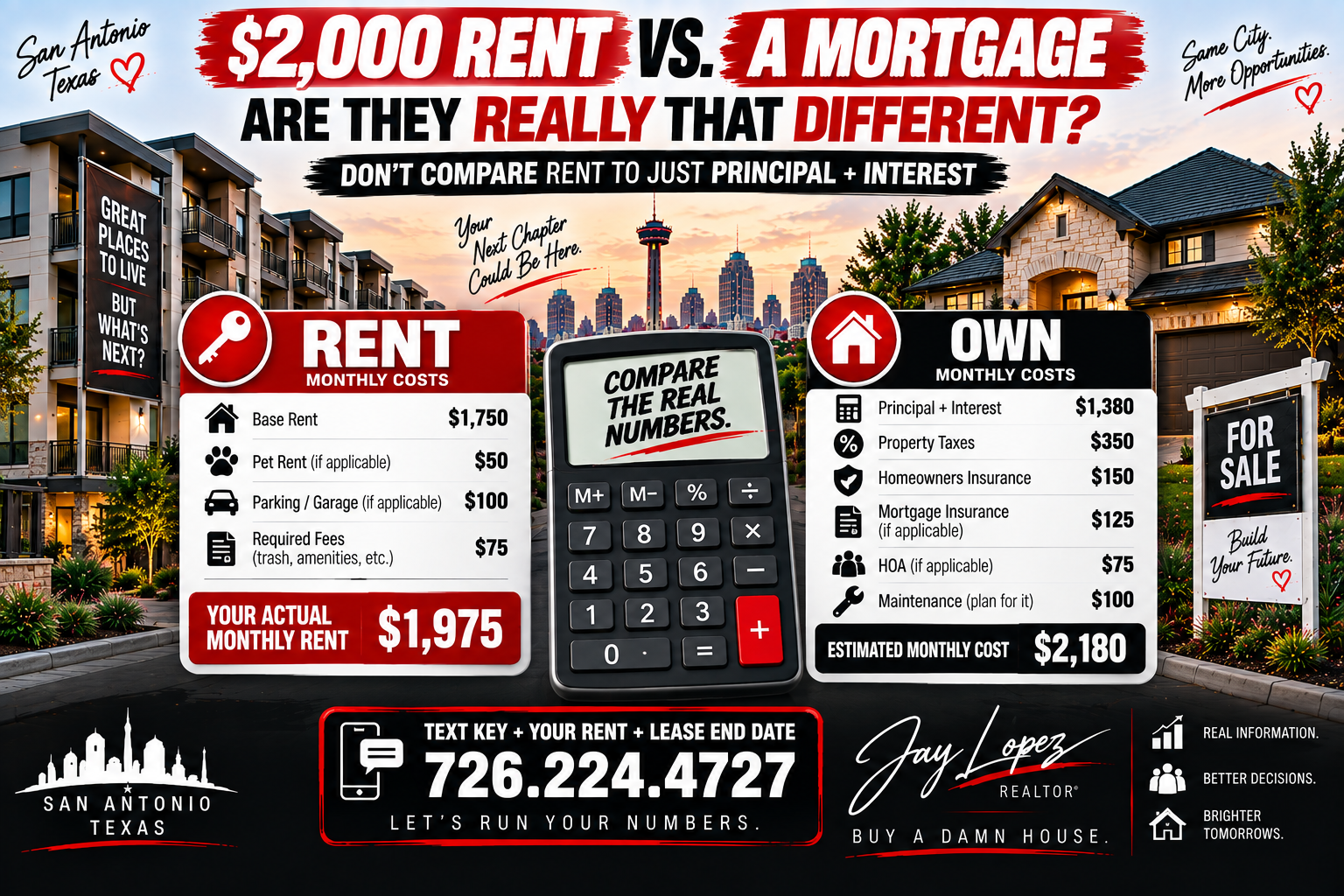
You're paying $1,700 a month in rent.
Or maybe it's:
$1,900.
$2,100.
$2,300.
And eventually somebody says:
“For that much money, you could be paying a mortgage!”
Maybe.
But before we turn that into a catchy social-media slogan, we need to do something important:
Actually run the numbers.
Because your rent payment and a mortgage payment aren't automatically an apples-to-apples comparison.
But if you're paying significant rent every month in San Antonio?
It's absolutely worth finding out what buying might look like.
1. Start With What You're REALLY Paying to Rent
Don't just look at the number printed next to:
Monthly Rent
on your lease.
What actually leaves your bank account every month?
Depending on your rental, you might also be paying:
Pet rent
Parking
Garage fees
Storage
Trash or service packages
Required amenities
and other recurring charges.
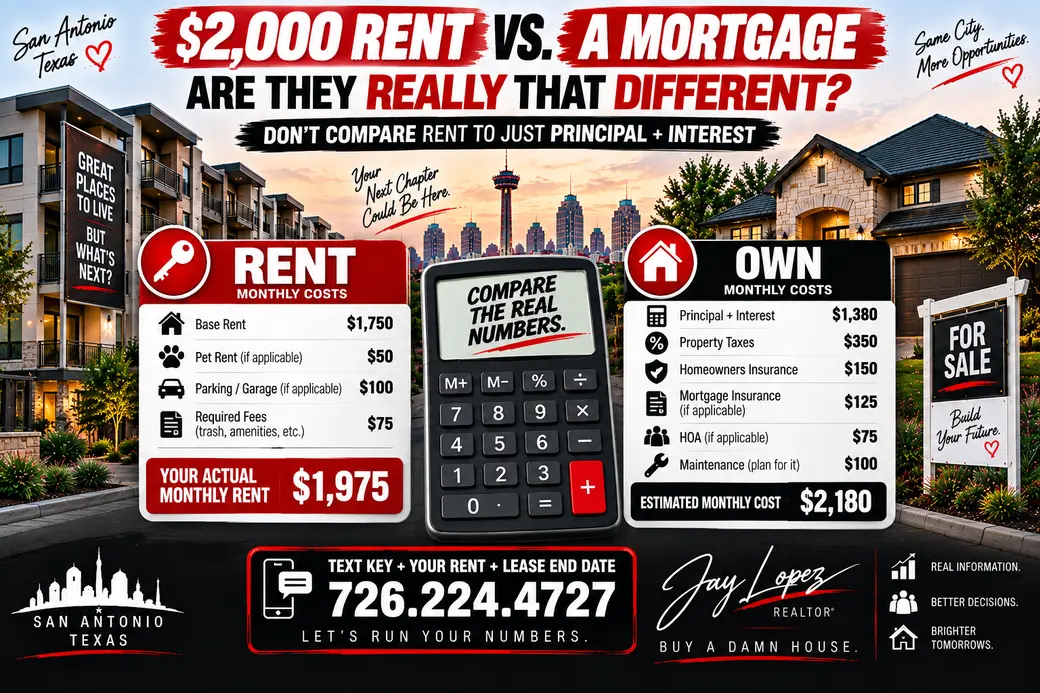
For example:
Base rent: $1,750
Pet rent: $50
Garage: $100
Other required monthly fees: $75
Your actual recurring housing expense may be closer to:
$1,975/month
That's the number worth knowing.
2. Now Let's Talk About the Word “Mortgage”
When people say:
“My mortgage is $1,800.”
they may be talking about different things.
Sometimes they're talking about only:
Principal + Interest
Other times they're talking about the entire payment collected by their mortgage servicer.
Those are very different comparisons.
For many homeowners, the monthly housing cost can include:
Principal
Interest
Property taxes
Homeowners insurance
Mortgage insurance, if applicable
and potentially
HOA dues or assessments.
So when comparing rent to owning, don't compare:
$1,900 rent
to
$1,900 principal and interest.
We need the fuller picture.
3. Principal and Interest
Part of a traditional mortgage payment goes toward the principal balance of the loan.
Another part pays interest.
The amount depends on things such as:
Loan amount
Interest rate
Loan term
and the structure of the mortgage.
This is the part most online mortgage calculators show first.
But it's not necessarily your complete housing cost.
4. Property Taxes Matter—a Lot
If you're looking at homes in the San Antonio area, property taxes need to be part of the conversation.
Taxes vary by property and taxing jurisdiction.
Two houses listed for exactly the same price can potentially have different tax obligations.
And that can change the monthly payment estimate.
This is why I don't want buyers saying:
“I can afford a $350,000 house.”
I want to know:
“What does this particular $350,000 house look like monthly?”
That's much more useful.
5. Be Especially Careful With New Construction Taxes
This deserves its own warning.
You find a brand-new house online.
The property-tax history looks surprisingly low.
Amazing!
Except the historical amount may reflect a time when the property was assessed differently, such as before the completed home existed.
That old number may not be a good estimate of the taxes associated with the completed property.
When comparing a new-construction payment, use an appropriate estimate.
Your lender can help you evaluate this.
6. Homeowners Insurance Belongs in the Comparison
Renters may carry renters insurance.
Homeowners insurance is different.
Its cost depends on factors involving the property, coverage and insurer.
That means we don't simply guess:
“Insurance will probably be about $___.”
Get an actual quote when you're seriously evaluating a property.
Insurance can materially affect affordability.
7. What About Mortgage Insurance?
Depending on the loan program, down payment and other factors, mortgage insurance may apply.
For example, certain conventional loans with lower down payments can include private mortgage insurance.
FHA financing generally includes mortgage insurance under program rules.
VA-backed loans don't have monthly mortgage insurance, although a VA funding fee may apply unless the borrower qualifies for an exemption.
Different loan programs structure these costs differently.
That's why the financing matters just as much as the house price.
8. Don't Forget the HOA
House #1:
No HOA.
House #2:
$75/month HOA.
House #3:
Different HOA structure entirely.
Those differences should be part of your comparison.
An HOA isn't automatically good or bad.
But if it affects your monthly or periodic ownership costs, it belongs in the budget.
9. And Then There's Maintenance
This is the part renters sometimes forget.
At an apartment:
Air conditioner stops working?
Call maintenance.
Plumbing problem?
Call maintenance.
Something breaks?
Usually call the landlord or property manager, subject to your lease.
Homeowner?
You may be calling:
Your wallet. 😂
Homeowners should budget for maintenance and repairs.
There isn't one universal monthly maintenance amount that's correct for every property.
A newer home and an older home with aging systems may have very different needs.
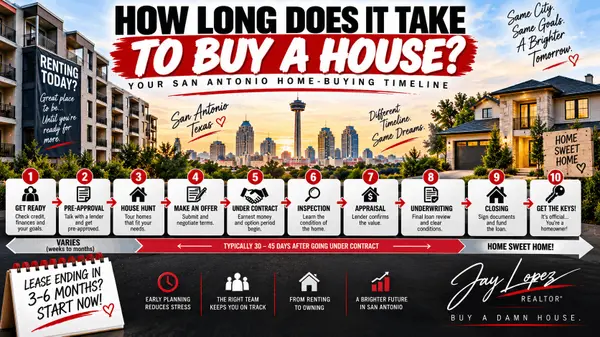
10. So Could Rent Really Be Close to Owning?
Potentially.
For some renters, the estimated monthly ownership cost of certain homes may be reasonably close to what they're already spending on rent.
For others?
Buying may cost significantly more each month.
And for others, the financing or upfront costs may mean buying isn't practical yet.
That's why I don't want to tell you:
“Your rent is $2,000, so you can definitely buy.”
I want to say:
“You're paying $2,000. Let's find out what your options actually are.”
Big difference.
11. A Simple Example
Let's say you're currently spending:
$2,000/month on rent and recurring rental fees.
Now suppose we identify a home you're interested in.
Instead of looking only at the home's price, we ask a lender to estimate the housing payment based on:
Your financing
Current applicable rate
Estimated taxes
Insurance
Mortgage insurance, if applicable
and other relevant expenses.
Then we compare.
Maybe the ownership estimate is:
Lower than your current rental cost.
Maybe it's:
Close.
Maybe it's:
Several hundred dollars higher.
Now we have information.
12. Don't Forget Upfront Costs
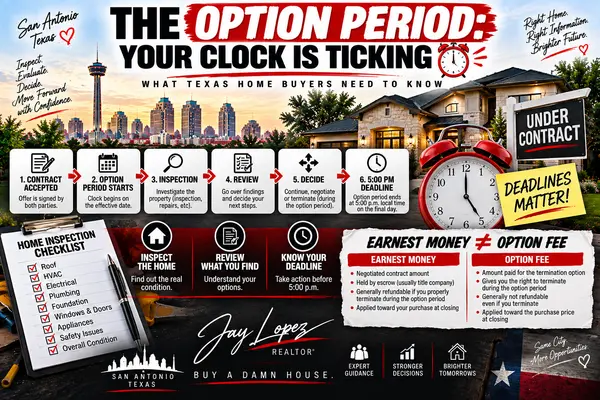
Even if the monthly numbers look similar, buying can require more money upfront.
Depending on the transaction, that may include:
Down payment
Closing costs
Prepaid expenses
Earnest money
Option fee
Inspection
and other costs.
Some financing programs can reduce the down-payment requirement.
Seller contributions may sometimes help with allowable costs when negotiated and permitted.
Builders may sometimes offer incentives.
But don't compare only the monthly payment and forget what it takes to get to closing.
13. You May Not Need 20% Down
This myth keeps coming back.
Qualified borrowers may have access to financing that requires considerably less than 20% down.
Depending on eligibility and property requirements, options can include:
Conventional
FHA
VA
USDA
and potentially assistance programs.
The right option depends on your circumstances.
Don't pick a loan because somebody made a 15-second TikTok saying it's the “best.”
14. VA Renters Should Definitely Run the Numbers 🇺🇸
If you're an eligible Veteran or service member renting around San Antonio, your VA benefit is worth investigating.
Eligible borrowers with sufficient entitlement may be able to purchase with no down payment required by the VA loan program, subject to lender approval and property requirements.
VA loans also don't have monthly mortgage insurance.
Some eligible borrowers may be exempt from the VA funding fee.
That does not mean:
“VA = zero dollars needed.”
There may still be closing costs, prepaid expenses and other transaction costs.
But don't keep renting simply because you assume you need a massive down payment.
Find out.
15. What About Builder Incentives?
This can make the comparison interesting.
San Antonio-area builders may periodically offer incentives on certain homes.
Depending on the promotion and qualifications, those could involve:
Interest-rate incentives
Closing-cost assistance
Price reductions
or other offers.
Builder incentives change.
Specific rates and terms should always be verified.
But if you're comparing an apartment renewal with homeownership, it can make sense to look at both:
Resale homes
and
New construction.
16. A Lower Interest Rate Doesn't Automatically Mean a Better Deal
This is another trap.
Builder A advertises:
“SPECIAL RATE!”
Builder B offers:
Different price + different incentives.
Which one is better?
You can't know from the advertised rate alone.
Compare:
Purchase price
Financing costs
Loan terms
Closing costs
Taxes
Insurance
HOA
and your expected ownership timeline.
Look at the whole deal.
17. Don't Stretch Your Budget Just to Beat Rent
Suppose you're paying:
$1,800 in rent.
And the home you love would cost substantially more each month after considering the full ownership cost.
Could a lender potentially approve you?
Maybe.
Does that automatically mean you should do it?
No.
Your comfortable payment matters.
You still need money for:
Food
Transportation
Savings
Emergencies
Retirement
and occasionally doing something besides sitting inside your house admiring the mortgage. 😂
18. Think Beyond Month One
Don't ask only:
“Can I make this payment?”
Ask:
“Can I comfortably make this payment?”
“Can I still save?”
“Can I handle repairs?”
“What if insurance or taxes change?”
“What if I need a vehicle?”
“Do I have emergency reserves?”
That's how you evaluate affordability.
19. Homeownership Can Build Equity—but Don't Treat It Like a Guarantee
With a typical amortizing mortgage, part of your principal-and-interest payment reduces the loan balance.
That can help build equity over time.
Changes in property value can also affect equity.
But home values can rise or fall.
Buying a home isn't a guaranteed short-term investment return.
Think longer term.
20. The Real Question Isn't Rent vs. Mortgage
Here's the shift I want you to make.
Don't ask:
“Is my rent close to a mortgage?”
Ask:
“How does my current cost of renting compare with the realistic cost and responsibilities of owning a home that fits my needs?”
That question is less catchy.
😂
But it's a much better financial question.
The 5-Minute Renter Comparison
Grab these four pieces of information:
1. Your current rent
2. Your recurring rental fees
3. Your lease expiration date
4. The San Antonio area where you'd want to buy
Then talk with a lender about your financial picture.
From there, we can look at actual homes.
Now we're comparing:
YOUR RENTAL
to
REAL HOMES
using
YOUR NUMBERS.
That's the comparison that matters.
Don't Assume. Find Out.
Maybe you're not ready to buy.
That's okay.
Maybe you're six months away.
Great.
Maybe you're already in a position to start looking.
Even better.
But don't renew another lease simply because:
“I figured buying would be way more expensive.”
Let's find out whether that's actually true for you.
Want Me to Help You Run the Comparison?
Make it easy.
🔑 Text KEY to 726.224.4727
Send:
Your monthly rent
Your lease expiration
and
Where you'd like to live.
Example:
“KEY — $1,950 — April — near Randolph.”
We'll start there.
Follow @jaylopezrealtor for San Antonio homes, new construction, VA information, first-time buyer education and real estate tips.
Buy a damn house.
Categories
Recent Posts