What Is Earnest Money in Texas and How Does It Work?


You found the house.
You made an offer.
The seller accepted it.
Everybody celebrates.
Then your Realtor says:
“Now we need to get your earnest money delivered.”
And the first-time buyer says:
“My what money?” 😂
Welcome to another phrase nobody really thinks about until they buy a house.
Earnest money is an important part of many Texas real estate transactions, but buyers sometimes misunderstand what it is, where it goes, and what happens to it.
So let's make this simple.
1. What Is Earnest Money?
In a Texas residential transaction, earnest money is an amount the buyer agrees in the contract to deliver to the escrow agent.
People sometimes describe it as a “good-faith deposit.”
That's a useful way to understand the general concept, but what really matters is what your contract says.
The amount, deadline, escrow agent and rights of the parties are governed by the contract.
That's why this isn't something we handle casually.
2. Is Earnest Money the Same as a Down Payment?
No.
These are different concepts.
Your down payment is part of the financing structure for purchasing the property.
Earnest money is money delivered under the terms of the real estate contract.
For example, imagine you're purchasing a $300,000 home and your financing requires a particular down payment.
You may also have agreed to deliver earnest money under your contract.
Don't automatically add those amounts together and assume that's your total cost.
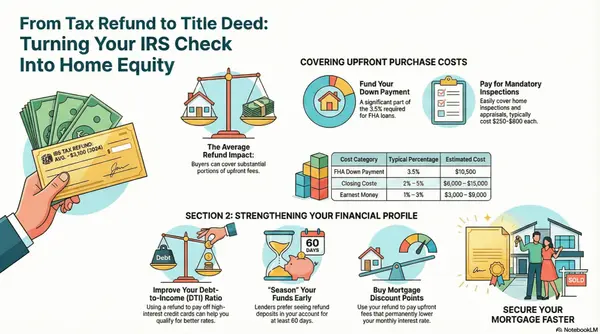
At closing, earnest money is generally accounted for as a credit to the buyer according to the contract and settlement figures.
3. Who Decides How Much Earnest Money Is?
The earnest money amount is a negotiated contract term.
There isn't one universal amount that every Texas home buyer must use.
The appropriate amount can depend on factors such as:
- Purchase price
- Market conditions
- Offer strategy
- Seller expectations
- Other terms of the offer
You'll sometimes hear people use percentages or local customs as rules of thumb.
But those aren't substitutes for looking at the actual transaction.
Your Realtor can help you evaluate an amount when preparing the offer.
4. Where Does the Earnest Money Go?
This is important:
You generally aren't handing the seller a check.
The contract identifies an escrow agent.
In many transactions, that may be the title company handling the closing.
The escrow agent holds the funds according to the contract and applicable requirements.
Your Realtor should tell you exactly where the funds need to go.
5. When Is Earnest Money Due?
This is where buyers need to pay close attention.
The Texas contract establishes deadlines for delivering earnest money.
Deadlines matter.
Don't assume:
“We signed the contract Friday, so I'll deal with the money sometime next week.”
No.
Once the contract is executed, your Realtor should immediately explain:
How much is due
Where it goes
How it can be delivered
and
The deadline.
Put it on your calendar.
Set an alarm.
Tattoo it on your hand.
Okay, maybe not the last one. 😂
But take it seriously.
6. What Happens If You Miss the Deadline?
Missing a contractual deadline can have consequences.
Exactly what rights or remedies apply depends on the contract and circumstances.
This is why I don't want buyers relying on:
“I thought I had until Friday.”
Your Realtor should help you understand the applicable deadline based on the executed contract.
If there's ever uncertainty about a contractual obligation, address it immediately rather than guessing.
7. Is Earnest Money Refundable?
This is one of the biggest questions buyers ask.
“If I don't buy the house, do I get my earnest money back?”
The correct answer is:
It depends on why the transaction ends and what the contract provides.
Texas contracts can contain provisions giving buyers termination rights under certain circumstances.
Those rights may arise from negotiated contract provisions or applicable addenda.
If a buyer properly terminates under a contractual right, the contract may provide for the earnest money to be returned to the buyer.
But you should never assume:
“I can cancel whenever I want and automatically get everything back.”
Contract terms and deadlines matter.
8. What Does the Option Period Have to Do With Earnest Money?
Texas residential contracts commonly allow buyers to negotiate a termination option.
When properly established, this can give the buyer an unrestricted right to terminate during the negotiated option period under the terms of the contract.
This is often when buyers conduct inspections and further evaluate the property.
The option fee and earnest money are different contract items.
Buyers often confuse them because both may be delivered around the beginning of the transaction.
We'll cover the option period in detail in the next article.
9. What Happens to Earnest Money During the Transaction?
Assuming the transaction continues toward closing, the escrow agent holds the earnest money.
It doesn't simply disappear.
When the transaction closes, the earnest money is generally reflected in the settlement accounting and credited according to the contract.
That's why I tell buyers:
Don't think of earnest money as an extra pile of money that vanishes.
It becomes part of the transaction's accounting.
10. What Happens to Earnest Money at Closing?
Let's use a simplified example.
Suppose you previously delivered:
$3,000 in earnest money.
When the final settlement figures are calculated, that money is generally reflected as a credit to you.
Your actual cash to close will take into account applicable:
Down payment
Closing costs
Credits
Deposits
Prepaids
and other settlement figures.
Your lender and title company will provide the actual numbers for your transaction.
11. Can Earnest Money Be Used Toward Closing Costs?
Think about it this way:
The earnest money you've already deposited is generally accounted for as part of your funds in the transaction.
It isn't necessarily labeled:
“This exact $3,000 pays this exact fee.”
The final settlement statement brings the transaction's debits and credits together to determine the amount needed to close.
That's why the number we ultimately care about is:
Cash to close.
12. Can a Buyer Lose Earnest Money?
Potentially.
A buyer's rights to earnest money depend on the contract and circumstances.
If a buyer fails to perform under the contract without an applicable contractual right to terminate, there may be consequences involving the earnest money and other remedies.
That's exactly why:
Deadlines matter.
Contract terms matter.
Communication matters.
If something changes during your purchase, call your Realtor immediately.
Don't decide on your own:
“I'm just not buying it anymore.”
There may be contractual consequences that need to be understood.
13. What If the Buyer and Seller Disagree About the Earnest Money?
Sometimes a transaction terminates and the parties disagree about who is entitled to the funds.
The escrow agent doesn't simply decide:
“I like the buyer better, so here you go.”
There can be contractual and legal procedures involved in the release of earnest money.
If a dispute develops, the parties may need guidance beyond what a Realtor is permitted to provide.
A Realtor can explain the contract and transaction within the scope of their role, but cannot provide legal advice.
When legal rights are disputed, an attorney may be appropriate.
14. Is More Earnest Money a Stronger Offer?
Potentially, but this needs context.
A seller may consider the earnest money amount as one component of an offer.
But sellers can evaluate many things:
Purchase price
Financing
Closing date
Option terms
Requested contributions
Contingencies
and other terms.
Simply offering a huge earnest-money amount doesn't automatically make an offer better.
The entire offer matters.
15. Should You Put Down as Much Earnest Money as Possible?
Not automatically.
Like every other offer term, earnest money should be considered strategically.
You need to understand:
How much you're agreeing to deliver
What contractual protections you have
What deadlines apply
and
What could happen if the transaction doesn't close.
Don't use a number simply because:
“That's what somebody on TikTok said makes an offer strong.” 😂
Your offer should be built for your actual transaction.
16. How Do You Deliver Earnest Money?
The available delivery methods depend on the escrow agent.
Depending on the title company and transaction, options may include methods such as:
Wire
Check
Electronic earnest-money service
or another accepted method.
Follow the title company's instructions.
And if you're wiring funds:
BE EXTREMELY CAREFUL.
Wire fraud is a serious risk in real estate transactions.
17. Protect Yourself From Wire Fraud
If you receive wiring instructions electronically, independently verify them with the title company through a trusted contact method.
If you receive a message saying:
“Our wiring instructions changed.”
Stop.
Do not send money until you've independently verified the change.
Criminals can create emails that look extremely convincing.
Never let urgency override verification.
18. Earnest Money and New Construction
New-construction contracts can work differently from standard resale transactions.
Builders may use their own contracts and may require deposits according to their particular terms.
Those deposits and refund provisions can be different from what you may see in a standard Texas resale contract.
This is one reason I want buyers to understand what they're signing before handing over money.
The builder's salesperson represents the builder.
Consider having your own representation involved early in the process.
19. Earnest Money for VA Buyers 🇺🇸
Using a VA-backed loan doesn't automatically eliminate earnest money from the real estate contract.
A VA buyer may still negotiate and deliver earnest money like other buyers.
The financing program and real estate contract are related parts of the transaction, but they aren't the same thing.
Eligible VA buyers may have certain financing benefits, but they still need to understand the contract they're signing.
20. Don't Confuse Earnest Money With “Money Lost”
This is probably the misconception I want to eliminate most.
A first-time buyer hears:
“We need $3,000 earnest money.”
and thinks:
“So I'm paying an extra $3,000 just to make an offer?”
Not exactly.
If the transaction closes, the earnest money is generally credited through the transaction's settlement accounting.
The better question isn't:
“How much extra does earnest money cost me?”
It's:
“How much money do I need available, when do I need it, and how will it be accounted for?”
That's a much better way to plan.
The Three Things I Want You to Remember
If you remember nothing else about earnest money, remember these:
1. The amount is negotiated.
2. Delivery deadlines matter.
3. Whether it's returned after termination depends on the contract and circumstances.
Don't guess.
Don't rely on what happened in your friend's transaction.
And don't wait until the deadline to figure out where the money goes.
Buying a House? Know What You're Signing.
Real estate contracts can look intimidating.
That's okay.
You aren't supposed to already know everything.
Ask questions.
Your Realtor should be able to explain the real estate transaction and contract provisions within the scope of their role so you understand what you're agreeing to.
If you want to start the buying process in San Antonio:
🔑 Text KEY to 726.224.4727
Tell me:
“I'm thinking about buying.”
We'll start with the game plan and take the process one step at a time.
Follow @jaylopezrealtor for San Antonio homes, new construction, VA information, first-time buyer education and real estate tips.
Buy a damn house.
Featured Image
This one should make a confusing term instantly understandable.
Image Headline
EARNEST MONEY: WHERE DOES IT GO?
Secondary:
IT'S NOT JUST “EXTRA MONEY.”
Visual flow:
BUYER → EARNEST MONEY → ESCROW/TITLE COMPANY → CLOSING → CREDIT TOWARD TRANSACTION
Then three large callouts:
💰 AMOUNT = NEGOTIATED
⏰ DEADLINE = IMPORTANT
📄 REFUND = DEPENDS ON THE CONTRACT
I'd show a home under contract with keys, contract and escrow/title imagery, plus the San Antonio skyline.
Same black + white + deep red branding we've established.
Jay Lopez | REALTOR®
Buy a damn house.
Categories
Recent Posts